5.4 Adaptation, Growth, and Reinvention
Growth Does Not Have an Expiration Date
If I asked you to picture a twenty-year-old, you would probably have no trouble imagining a person in the middle of becoming.
Most of us expect young adults to experiment with different identities, explore new interests, develop new skills, change directions, and occasionally make spectacular mistakes. We assume growth is part of the package. In fact, if a twenty-year-old announced that they had everything figured out and had no intention of changing for the rest of their lives, most of us would be skeptical.
Development is expected.
Now imagine someone who is seventy-five.
Many people unconsciously tell a very different story. We often assume that older adults have already become who they are going to become. The major decisions have been made. The important chapters have been written. The remaining task is simply to maintain what exists for as long as possible.
Yet the older adults I have known rarely cooperate with this narrative.
Some discover entirely new interests after retirement. Others return to passions that had been waiting patiently in the background for decades. Some begin volunteering, traveling, painting, writing, mentoring, studying, or advocating for causes they never had time to pursue during earlier stages of life. Others develop new perspectives on relationships, purpose, spirituality, or identity.
A former accountant becomes a master gardener. A widow who never traveled alone suddenly finds herself exploring places she always wanted to visit. A retired mechanic enrolls in community college classes simply because he enjoys learning. A grandmother begins writing family stories so future generations will know where they came from.
These examples are not remarkable because they are unusual.
They are remarkable because they remind us that development continues throughout the lifespan.
The opportunities available at seventy-five may look different than the opportunities available at twenty-five, but there is little evidence to suggest that human growth suddenly stops at retirement. We continue learning, adapting, reflecting, questioning, and discovering new possibilities long after society assumes the story has already been written.
One of the most persistent myths about aging is the belief that development belongs primarily to the young. Gerontology tells a different story. The tasks of development change across the lifespan, but the potential for growth remains.
Perhaps the more interesting question is not whether growth continues.
Perhaps the better question is what remains possible.
Possibility and the Second Half of Life
One of the things I have noticed over the years is that possibility often arrives disguised as disruption.
Retirement disrupts routines that may have existed for decades. Children leave home. Caregiving responsibilities come to an end. Health conditions force adjustments to daily life. A move becomes necessary. A spouse dies. Friendships change. Entire chapters of life close, often without our permission.
Most people would not voluntarily choose many of these experiences. They can be painful, disorienting, and deeply challenging.
Yet disruption also creates something that did not exist before.
It creates space.
The teacher who no longer teaches full-time suddenly has afternoons available. The caregiver who spent years focused on someone else's needs is forced to ask a question that may not have occurred to them for a very long time: What do I want?
The retiree who once introduced herself primarily through her profession begins wrestling with a surprisingly complicated question:
Who am I now?
For some people, this question feels frightening. For others, it feels liberating. Most experience a mixture of both.
The answer rarely appears overnight. People do not wake up the morning after retirement or widowhood with a fully formed new identity. The process is usually slower than that. It unfolds through curiosity, experimentation, and a willingness to be a beginner again.
Some people discover interests they never had time to pursue. Others return to interests that were pushed aside while careers and family responsibilities occupied center stage. Some build new relationships. Others deepen existing ones. Many find themselves exploring possibilities they never seriously considered earlier in life.
What appears from the outside as reinvention is often something quieter.
It is the gradual rediscovery of possibility.
The second half of life is filled with losses. Gerontologists spend a great deal of time studying those losses because they are real and important.
What sometimes receives less attention is the fact that later life can also create opportunities. New freedoms emerge. New choices become available. New perspectives develop. Many people discover that they have far more room to shape their lives than they once believed.
Creativity Beyond Art
When students hear the word creativity, many immediately begin disqualifying themselves.
They imagine artists, musicians, writers, actors, and inventors. If they cannot paint a landscape, write a novel, or perform on stage, they assume creativity belongs to somebody else.
The problem is that creativity is much broader than artistic talent.
At its core, creativity is the ability to recognize possibilities that did not previously exist.
My mother once told me a story about a sock lying on the floor. She said that she saw a sock. My grandmother saw a potential polishing cloth. I saw a puppet.
Three people looked at the same object and saw three entirely different things.
I've always loved that story because it captures something important about creativity. Creativity is not always about making something new. Sometimes it is about recognizing possibilities that other people overlook.
By that definition, creativity appears everywhere in later life.
The older adult who redesigns a garden to accommodate arthritic knees is being creative. The grandparent who learns new technology in order to maintain relationships with distant grandchildren is being creative. The caregiver who develops routines that preserve dignity while supporting a loved one's independence is being creative. The retiree who discovers a new purpose after leaving the workforce is being creative.
None of these examples would typically appear in an art gallery.
All of them require imagination.
When circumstances change, people are often forced to ask new questions. How can I continue doing what matters to me? What alternatives exist? What have I not considered yet? How might I approach this differently?
The answers to those questions often require creativity.
In many ways, adaptation itself is a creative act.
This broader understanding of creativity helps explain why later life can be such a fertile period for growth. Creativity is not limited to artistic expression. It is present whenever people solve problems, adjust to change, discover new possibilities, or find meaningful ways to remain engaged with life.
The older adults who inspire us most are often not those who avoided every challenge. They are the ones who responded creatively when challenges appeared.
Countries around the world are recognizing the importance of late life creativity, and are developing programs that encourage older adults to participate and expand their inner worlds through art and music.
While creativity extends far beyond art, the arts provide some of the most visible examples of continued growth in later life. Our culture often treats creativity as though it belongs to the young, yet history tells a very different story. Many artists produced some of their most influential and innovative work during the later decades of life, adapting to physical limitations, changing perspectives, and new ways of seeing the world. Creativity, curiosity, and the desire to express ourselves do not come with an expiration date. In many cases, they deepen with experience. As you look at the artists below, pay attention not only to their ages, but also to the ways they continued creating, adapting, and growing throughout their lives.

Betye Sarr started sculpting when she was in her late sixties. By 2010, she had sculptures displayed at the National Art Museum. She was most known for her use of mixed mediums as a storytelling device. Her most famous works focus around the story and history of Black Americans. Her work can be visited at the Hammer Museum. (It's worth the click!)

Most of you are familiar with the work of Monet. One of his most famous series was called Water Lilllies. He completed it between the ages of 56-86, from his home. What people don’t realize is that he was blind with cataracts when he created this great work. He completed some of his most famous in the series in his last three or four years of life.
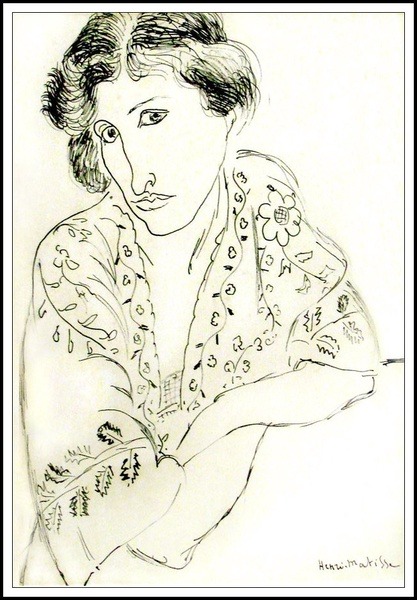
Matisse was a contemporary artist, confined to a wheelchair during the last 10 years of his life. He did some of his most famous work when most people thought he was done. They didn’t believe that anyone could be creative if they were old and left alone, disabled.

Georgia O’Keefe is recognized as the mother of American modernism. She specialized in Southwestern Art, but she had an absolutely historic series that she did of the inside of flowers. People all thought that it was erotic art, but really it was the stamens and pistons of the interiors of orchids, dahlias and other big beautiful flowers. She lived to 98 and produced some of her most famous works in the last 10 years of her life.
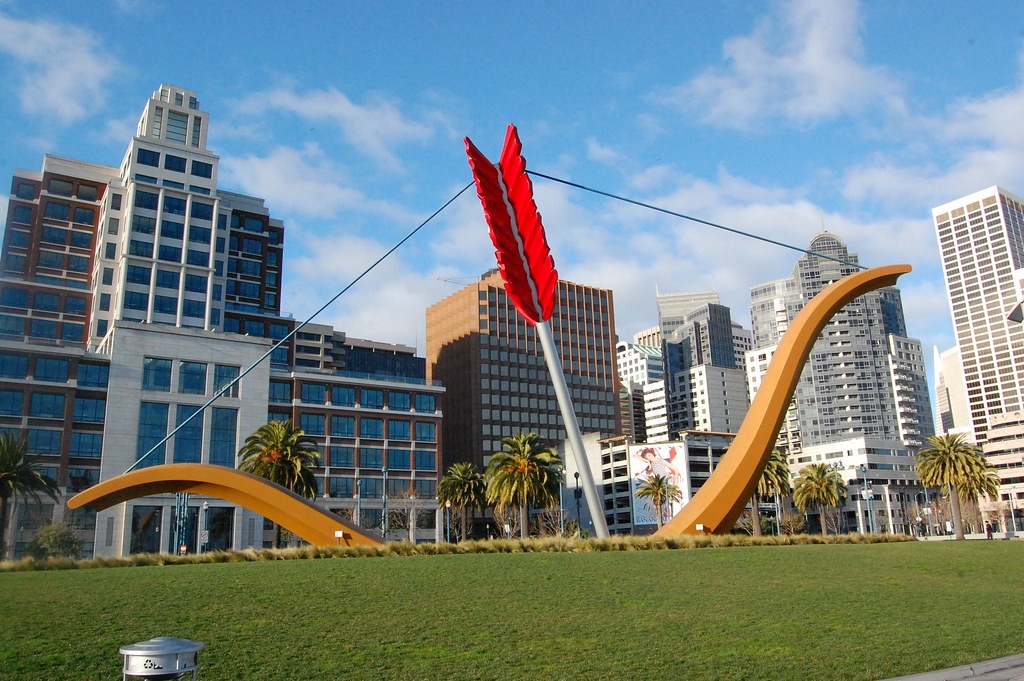
If you’ve been to a Giant’s game, you’ve seen the work of Claes Oldenburg. He did the arrow & bow sculpture, "Cupid's Span," that is displayed in the field just outside of ATT&T Park in San Francisco. He was 84 years old at the time. No, he wasn’t up on scaffolding with a welding torch, but he did the design and supervised the artwork's construction and installation.

It’s not just painters, though. Consider Pharrell Williams. He was a successful music producer in his 40’s when he released “Happy.” The song kickstarted an entirely new chapter of his career, and this “newcomer” took the charts, and The Voice, by storm.
Writers are frequently over age 50 before they see their first bestseller. James Michener published 40 books after age 40. Raymond Chandler, who wrote “The Big Sleep,” and six other novels, didn’t publish his first until age 44. Harriet Door was in her sixties when she finished her education, and at 74 won the National Book Award. And Millard Kaufman, who developed the cartoon character Mr. Magoo, was 90 when he decided to write his first novel.
Meaning, Spirituality, and the Bigger Questions
One of the things I have noticed over the years is that students often assume questions about meaning, purpose, and spirituality belong primarily to older adults.
In reality, most of us encounter these questions much earlier than we realize.
A serious illness can trigger them. So can the death of a loved one, a divorce, a career change, the birth of a child, military service, caregiving, retirement, or any experience that suddenly disrupts our assumptions about how life is supposed to unfold. Human beings have a remarkable tendency to ask deeper questions whenever life refuses to cooperate with our plans.
As people move through adulthood, however, those questions often become more difficult to ignore.
Earlier in life, much of our attention is directed outward. We are building careers, raising families, paying mortgages, completing degrees, managing responsibilities, and trying to keep up with the endless demands of daily life. There is always another deadline, another obligation, another goal waiting just beyond the horizon. Many people spend decades moving from one responsibility to the next without having much opportunity to stop and reflect on the larger picture.
Over time, that begins to change.
As people accumulate decades of experiences, they often find themselves looking at those experiences differently. Relationships become more layered. Losses accumulate. Accomplishments become part of a larger story rather than isolated events. People begin revisiting decisions they made years ago and considering how those decisions shaped the lives they ultimately lived.
Questions emerge naturally.
What has mattered most?
What lessons have I learned?
How have my experiences changed me?
What do I hope others remember about me?
What do I still hope to accomplish?
How do I make sense of the parts of my life that did not unfold the way I expected?
These questions are not necessarily religious, but they are deeply human.
This is where it becomes useful to distinguish between religion and spirituality.
Religion generally refers to organized systems of belief, practice, ritual, and community. Religious traditions often provide shared stories, moral frameworks, ceremonies, and answers to questions about suffering, purpose, morality, and mortality. They create communities that gather to celebrate births, mourn deaths, support one another during crises, and mark important transitions throughout life.
From a gerontological perspective, those functions matter. Social connection matters. Belonging matters. Ritual matters. Opportunities for service matter. For many older adults, religious communities provide friendship, continuity, support, identity, and a sense of place in the world at a time when other social roles may be changing.
Over the years, I have come to appreciate these visible aspects of religion more than I once did. When I first began studying religion, I was primarily interested in beliefs and ideas. What I gradually came to understand was that religion often serves practical human needs as well. It creates opportunities for connection. It provides structure during periods of uncertainty. It offers language and rituals for experiences that can otherwise feel overwhelming.
At the same time, some of the most important work happens internally.
Long before someone attends a service, participates in a ritual, or joins a faith community, they may already be wrestling with questions about meaning, identity, purpose, forgiveness, loss, hope, or legacy. That internal process is often what we mean when we talk about spirituality.
Spirituality can certainly be expressed through religion, but it is not limited to religion. Some people experience spirituality through prayer and worship. Others encounter it while creating art, spending time in nature, caring for loved ones, volunteering, writing, meditating, or simply reflecting on their experiences. The paths differ, but the underlying process is remarkably similar. People are trying to understand their place within a larger story and make sense of lives that are often far more complicated than they imagined when they were young.
One of the reasons spirituality becomes increasingly relevant in later life is that aging confronts us with realities that cannot be solved in the traditional sense.
Grief cannot be fixed.
Time cannot be recovered.
Mortality cannot be negotiated.
Many losses cannot be reversed.
Instead, people must learn how to hold these realities while continuing to engage with life. They search for ways to make meaning from suffering, to integrate difficult experiences into their life stories, and to understand how joy and loss can coexist in the same life.
This process is not unique to old age, but older adults often have a larger collection of experiences from which to draw. By the time someone reaches their seventies, eighties, or nineties, they may be reflecting on decades of relationships, accomplishments, disappointments, transitions, mistakes, and unexpected blessings. The task becomes less about predicting the future and more about understanding the life that has already been lived.
Researchers have consistently found that meaning and purpose are associated with greater life satisfaction, psychological well-being, resilience, and the ability to navigate stress and loss. Meaning does not eliminate hardship, but it can help people place hardship within a larger context. It provides a reason to continue investing in life even when life becomes difficult.
Perhaps that is why questions of meaning, spirituality, and purpose remain so important throughout the lifespan. Human beings seem to need more than survival. We want our experiences to matter. We want our struggles to mean something. We want to understand how our lives fit into a larger story.
As we age, that search often becomes less about finding answers and more about learning to live thoughtfully with the questions themselves.
Looking Ahead
One of the occupational hazards of being a gerontologist is that you spend a great deal of time thinking about the future.
After years of studying aging, I have noticed that I tend to see opportunities where other people see limitations. Perhaps it comes from spending decades watching older adults surprise themselves. Perhaps it comes from seeing people adapt to circumstances they never would have chosen and discovering strengths they did not know they possessed. Whatever the reason, I have trained myself to look for the flowers hidden among the weeds.
Not everyone shares that perspective.
For some people, aging is viewed primarily as a series of losses. For others, it is imagined as a magical period of wisdom, contentment, and self-discovery. The reality is usually somewhere in between. Aging is neither a punishment nor a golden ticket to enlightenment. It is simply the consequence of continuing to live.
What aging does provide is time.
- Time to learn.
- Time to make mistakes.
- Time to adapt.
- Time to discover what matters.
- Time to reconsider assumptions that once seemed certain.
- Time to become a slightly different version of yourself than the one you imagined when you were younger.
One of the reasons I enjoy teaching a course like this is that it gives us an opportunity to think about these issues before we find ourselves in the middle of them.
When you are twenty, thirty, or even forty years old, old age often feels impossibly distant. The challenges we have discussed in this unit may seem like concerns for some future version of yourself. Yet aging is not a destination we suddenly arrive at one day. It is a process that unfolds gradually through thousands of ordinary choices, experiences, relationships, and adaptations.
In many ways, preparing for aging is a bit like preparing for a long road trip.
You do not know exactly what the weather will be. You cannot predict every detour, traffic jam, flat tire, or unexpected stop along the way. What you can do is learn something about the vehicle you are driving and prepare yourself for the journey ahead.
You check the tires.
You top off the coolant.
You make sure the headlights work.
You keep a few useful tools in the trunk.
The concepts we have explored throughout this unit are much the same. Personality, coping skills, resilience, creativity, meaning, spirituality, self-care, and adaptability are not guarantees that life will be easy. They are tools. When challenges arise, those tools help us navigate the bumps, curves, and occasional potholes that inevitably appear along the road.
As we move into the next unit, we will shift our attention away from the individual and toward the relationships that surround us. Because no matter how independent we imagine ourselves to be, aging never happens in isolation. Our lives are shaped by families, friendships, communities, caregivers, and social networks that support us, challenge us, and help define who we become.
After all, every road trip is influenced not only by the vehicle we drive, but also by the people traveling alongside us.