3.3 The Longevity Puzzle: Why Some People Age Differently Than Others
The Search for a Single Answer
By now, you may be feeling a little frustrated.
One theory tells us that aging is programmed into our biology. Another argues that aging results from accumulated damage. Yet neither explanation seems completely satisfactory. If aging is programmed, why do some people appear to age more slowly than others? If aging is simply the accumulation of damage, why do some individuals remain remarkably healthy despite decades of wear and tear?
Welcome to one of the biggest puzzles in gerontology.
For much of the twentieth century, researchers searched for the cause of aging. The hope was that somewhere there would be a master switch, a single mechanism that explained why human beings grow old. Instead, researchers found something far messier and far more interesting. Aging appears to emerge from the interaction of many forces operating simultaneously throughout the lifespan. Genetics influence how our bodies function and repair themselves, but genes alone do not determine outcomes. Nutrition, exercise, sleep, stress, environmental exposures, healthcare access, education, income, and social relationships all shape the aging process as well. Even then, two people with similar circumstances may age differently, reminding us that chance continues to play a role in human development.
Beyond Nature versus Nurture
One of the most important lessons emerging from modern aging research is that biology and environment are constantly interacting with one another. For decades, people argued about whether aging was primarily the result of genetics or lifestyle. Today, most researchers recognize that this is the wrong question. Rather than competing explanations, biology and environment continuously influence one another throughout life.
Studies of identical twins illustrate this point particularly well. Although twins share the same genetic blueprint, their lives gradually diverge. One may develop heart disease while the other remains healthy. One may remain physically active while the other becomes sedentary. One may spend decades in a supportive community while the other experiences chronic stress or social isolation. As researchers followed twins across the lifespan, it became increasingly clear that genetics establishes possibilities rather than destinies. The genes may be identical, but the environments in which those genes operate rarely are.
This realization has led scientists to focus on what is known as gene-environment interaction. Certain genetic traits may increase the likelihood of developing a particular condition, but environmental influences often determine whether those risks become reality. A person may inherit a predisposition toward heart disease yet never develop it because of health behaviors, access to medical care, or simple good fortune. Another individual may possess relatively few genetic risk factors and still experience significant health challenges because of environmental exposures, chronic stress, or lifestyle factors.
The Social Side of Biology
For gerontologists, this shift in thinking is particularly important because it reminds us that aging is not solely a biological process. The environments in which people live, work, learn, and grow old profoundly influence how aging unfolds. Researchers often describe these influences as the social determinants of health. Access to healthcare, educational opportunities, income, housing quality, neighborhood safety, transportation, nutrition, and social support all contribute to health outcomes across the lifespan.
Think back to our discussion of cumulative advantage and cumulative disadvantage in the previous unit. Small advantages and disadvantages tend to accumulate over time. A person who has access to preventive healthcare, stable housing, nutritious food, and educational opportunities may arrive in later life with a very different health profile than someone who has spent decades facing economic hardship, unsafe working conditions, environmental hazards, or limited access to medical care. The differences we observe in old age are often the result of forces that have been operating quietly for many years.
When viewed through this lens, it becomes difficult to talk about aging as though it is a uniform experience. The aging process unfolds within social realities that differ dramatically from person to person. Individuals who have access to resources that support health and well-being often enter later life with advantages that compound over decades. Others face obstacles that accumulate just as powerfully. The result is that aging is not experienced equally, even among people who share the same chronological age.
What Can We Learn from People Who Live to One Hundred?
One of the most fascinating examples of this complexity comes from research on longevity. Scientists have spent decades studying centenarians, individuals who live to age one hundred or beyond, hoping to discover the secret to a long life. If a single explanation for aging existed, this group should have provided a clear answer.
What researchers found instead was diversity.
Some centenarians exercised throughout life, while others were never particularly athletic. Some followed healthy diets, while others enjoyed foods that would make modern wellness influencers cringe. Some remained highly social and engaged, while others preferred quieter lives. Some carried genetic advantages associated with longevity, while others appeared to achieve exceptional longevity without any obvious biological advantage. Although researchers have identified patterns associated with long life, no single characteristic consistently explains why one person lives to one hundred while another does not.
This reality can be frustrating for those hoping for a simple answer. It is much easier to sell a miracle supplement, a special diet, or a revolutionary anti-aging treatment than it is to explain a lifetime of interacting influences. Human beings generally prefer simple explanations. Aging stubbornly refuses to provide them.
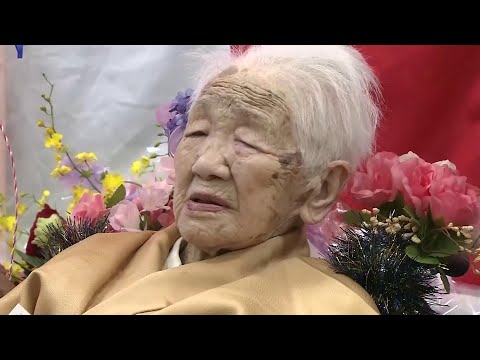
Kane Tanaka Links to an external site.Japan, b. 2 January 1903) has the longest record. When she passed, at the ripe old age of 119, she had held the record since 2020.
Thinking Like a Gerontologist
That is one reason gerontologists approach extraordinary claims with healthy skepticism. When a headline announces that scientists have discovered "the gene for longevity" or "the secret to reversing aging," it is worth pausing before accepting the claim at face value. How much of lifespan does the discovery actually explain? Was the study conducted in humans? Has it been replicated by other researchers? How large was the effect? Does the finding improve health, function, and quality of life, or does it simply alter a laboratory measurement?
Scientific skepticism is not cynicism. It is curiosity combined with evidence. It allows us to remain open to new discoveries while recognizing that extraordinary claims require extraordinary support.
What We Know So Far
The most honest answer to the question, "Why do we age?" is that scientists are still working on it. What has become increasingly clear, however, is that aging is neither entirely programmed nor entirely random. It emerges from a lifetime of interactions among biology, behavior, environment, opportunity, and adaptation. The same forces that influence our health in childhood and adulthood continue to shape our experiences in later life.
In other words, aging is not something that simply happens to us. It unfolds within the complicated realities of the lives we live, the choices we make, the opportunities we receive, and the environments we inhabit.
Understanding those interactions helps explain why no two people age in exactly the same way. It also prepares us for the next question: if aging results from all of these interacting processes, what do those biological changes actually look like in everyday life?
A Brief Detour: Can Anyone Predict When You Will Die?
If you spend enough time on the internet, you will eventually discover one of the many "Death Clock" calculators. These websites ask a series of questions about your age, sex, health behaviors, and lifestyle before providing an estimated date of death.
Students are often fascinated by these tools. Some find them entertaining. Others find them mildly unsettling. Most immediately want to know whether the prediction is accurate.
The answer is both yes and no.
These calculators are generally based on population statistics. Researchers know that smoking increases mortality risk, exercise is associated with longer life expectancy, and certain health conditions affect longevity. Using those patterns, a calculator can estimate where an individual might fall relative to the population as a whole.
What it cannot do is predict the future.
A calculator cannot know whether medical treatments will improve over the next twenty years. It cannot predict accidents, illnesses, economic changes, relationships, or the countless events that shape a human life. Most importantly, it cannot account for chance.
The value of these tools is not that they tell us when we will die. Their value is that they remind us how researchers think about risk. Science is often very good at predicting outcomes for large groups of people. It is much less successful at predicting the future of any one individual.
http://www.deathclock.comLinks to an external site.
http://gosset.wharton.upenn.edu/mortality/perl/CalcForm.htmlLinks to an external site.
Now you know how old you can expect to be, based on actuarial tables that are pretty accurate. Now, you need to consider what normal changes will occur as you progress along the chronology of your life. We experience a variety of physiological changes as we age. Some of the changes that we used to associate with normal aging are caused by a disease or other complication. Most of the expected changes that we experience as we age have little impact on "normal functioning" but manifest when our bodies are under stress.