12.5 Culture, Religion, and End-of-Life Celebrations
Throughout this unit, we have discussed grief, death, dying, autonomy, and end-of-life planning. One theme appears repeatedly: there is no single "correct" way to approach death.
Every society develops beliefs, traditions, rituals, and expectations surrounding illness, dying, death, and remembrance. These traditions help individuals make sense of loss, provide structure during times of uncertainty, and connect families to larger communities of meaning.
Religion often plays an important role in these decisions. Beliefs about the afterlife, reincarnation, spiritual continuity, suffering, the sanctity of life, or the relationship between the body and the soul may influence decisions about medical treatment, hospice care, organ donation, autopsy, cremation, burial, and funeral practices.
Culture can be equally influential. Some families place a high value on individual autonomy and direct communication. Others emphasize collective decision-making and family responsibility. Some communities encourage open discussions about death, while others consider such conversations private or even inappropriate.
Within the United States, healthcare professionals routinely care for individuals representing hundreds of cultural, religious, and spiritual traditions. It is impossible to memorize every belief system or ritual. More importantly, it is important to remember that individuals do not always follow every tradition associated with their cultural or religious background.
The goal is not to become an expert on every culture. The goal is to approach differences with curiosity, humility, and respect. Rather than assuming what someone believes, effective caregivers ask questions, listen carefully, and recognize that end-of-life decisions are often shaped by deeply held values that may not be immediately visible.
Understanding cultural and religious influences helps us recognize an important truth: while death is universal, the ways we understand, experience, and honor death are remarkably diverse.
Why Humans Create Funeral Rites
Across cultures and throughout history, humans have developed rituals surrounding death. While the rituals themselves vary dramatically, they often serve similar purposes. They provide structure during times of grief, help communities acknowledge a loss, honor the life of the deceased, and support the living as they begin adapting to life without that person.
Funerals, memorials, wakes, celebrations of life, prayer services, mourning periods, and remembrance ceremonies may look different from one culture to another, but they all help answer the same fundamental question: How do we say goodbye?
The following examples illustrate just a few of the many ways cultures and communities around the world respond to death. As you explore them, look beyond the specific rituals and consider the deeper questions they are attempting to answer: How do we honor the dead, support the living, and make meaning out of loss?
Hindu
(Source: 3-Minute Adventures)
Buddhist
(Source: The Walrus)
Jewish
(Source: NewJewishLearning)
Islamic
(Source: Our Grandfather's Story)

In Russia, particularly the Russian Orthodox church, the funeral must be held three days following death. However, we will mourn in black for 40 days. There are rituals around what color the body is buried in, and what gifts can be left in the casket. Coins are placed on the eyes, and a belt around the waist - all to help navigate the spirit’s way through the passage of life to death, and the afterlife.
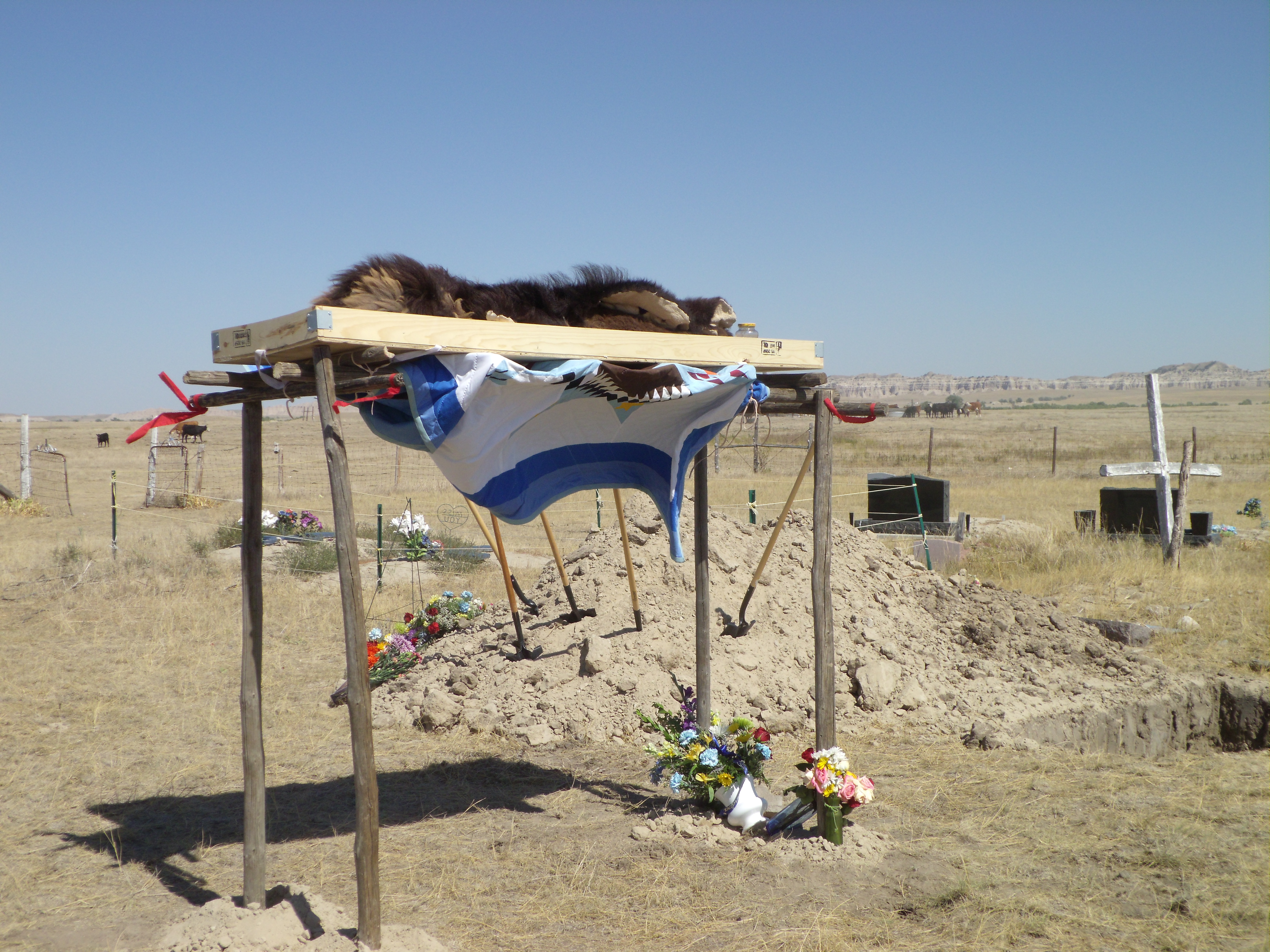
The Lakota Indians say that we don't want anything buried with us. We won't want to be wrapped in anything. We want nature to reabsorb us. Our soil existed before we were born, and when we die it will go back to the land. We used to see Lakota wooden platform burials, with nature taking its course. Now it is far more common to do a cremation, and have a grand celebration one year after the death. Why one year? That's what it takes for the soul to do its work in the universe and then come into another little person.
I once had the opportunity to observe a New Orleans Jazz Festival funeral. And I say, testable funeral because it really felt like that. It lasted five days. It included the most amazing demonstration of a parade. It was a very slow sad progression from the church to the cemetery, with soulful more full music that sounded like a funeral dirge. However, the parade from the cemetery to the reception hall was the wildest, fun, upbeat experience I've ever had. People holding umbrellas, dancing down the street, and praising God for this amazing person, and for heaven, and Jesus, and what a celebration of life should really be.
(Source: NOLAFestJunkie)

Mongolian and Lakota Sky Burials look very much alike and have a lot in common with the Lakota, believing that the soul transcends. It may seem a bit morbid to those of us are used to a more traditional method, but the tradition in these cultures is to chop up our love one's body into pieces, placing them on a mountain top, and exposing them to harsh elements. While this practice may seem unusual to those raised with other traditions, proponents view it as a profound return of the body to the natural cycle of life
I saw a fascinating documentary on the Madagascar turning of the bones. It's called famadihana. Every 5 to 7 years, bodies that have been in tuned, or exhumed from the crypt, perfume, rewrapped, and replaced. Much like a Dia Delos Muertos celebration, where there is a picnic at the graveside to allow the spirits of deceased family members to enjoy the company of the generations that follow them, in Madagascar, the guest of honors is at the table!
Please watch the video:
(Source: APA News Agency)
The Contemporary American Funeral
After looking at funeral traditions from around the world, it can be easy to assume that the United States has a single, standardized approach to death. In reality, American funeral practices reflect a mixture of religious traditions, cultural influences, historical customs, and commercial funeral services that have evolved over time.
What many people think of as a "traditional" American funeral typically includes visitation or viewing, a funeral or memorial service, and either burial or cremation. While these practices are often associated with Christian traditions, they have also been shaped by the growth of the funeral industry, changing social expectations, and advances in modern embalming and preservation techniques.
As a result, what feels "normal" to many Americans is not necessarily ancient, universal, or even particularly traditional. It is simply one of many ways humans have chosen to honor the dead and support the living.
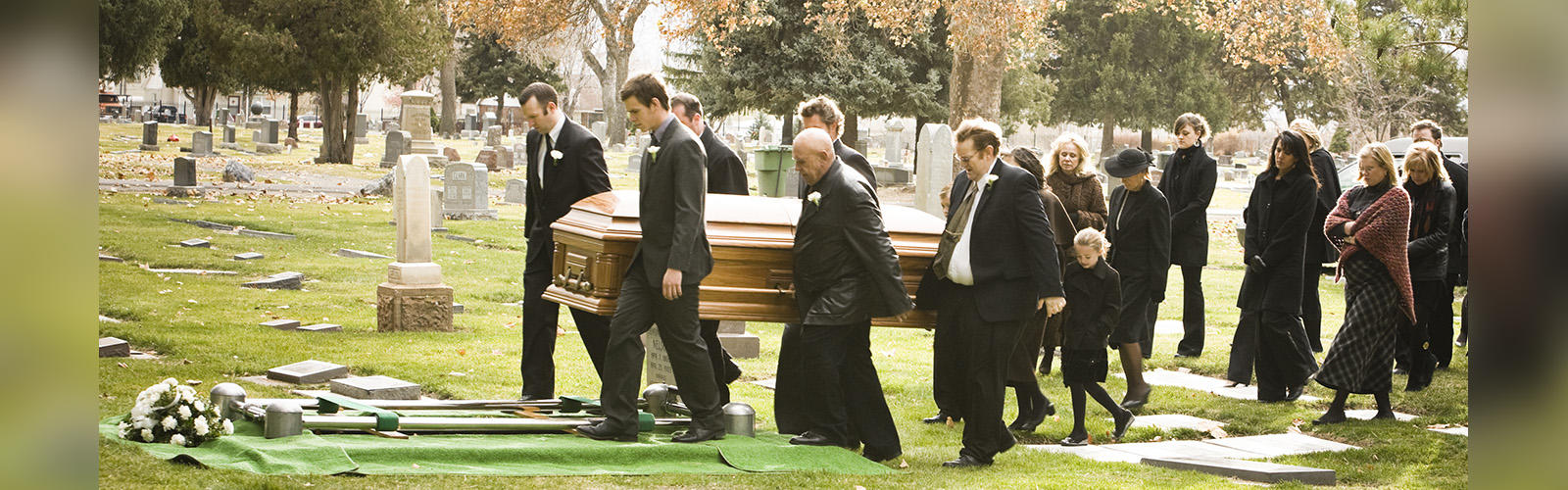
In the United States, we tend toward two tactics to dispose of our deceased. One choice is to place the remains into a casket (usually wood), and lower them into a gravesite in a cemetery. We adorn the gravesite with a headstone or other marker, and pay a fee to the location to maintain the grave as a part of the memorial. We use the site as a place to visit, to meditate or otherwise be close to the physical remains of our loved one.
Growing in popularity in the United States is cremation. Cremation is the act of incinerating the remains, and having the ashes in an urn or container. We may then bury the ashes in the ground similar to a casket, or place ashes into memorial crypts on site of a cemetery. It is common to scatter ashes in a favorite place, or to take ashes out to sea.
Depending on the county, the caskets or urns may need to be sealed in concrete prior to being placed in the earth. The concern is not about the remains, but the materials that the caskets and urns are made with. The metal and epoxy, and the chemicals that may have been used in embalming, can leach into the ground over time and poison the water supply.
The traditional use of caskets is a potential problem when you think about the massive swell of the baby boom population dying in the next 50 years. What happens to the bodies? We don't have enough available ground to accommodate that number of caskets. Nor can most family members want to pay the exorbitant costs for burial sites in Memorial Gardens, let alone the plot's annual upkeep.
Americans have increasingly moved away from formal funerals toward personalized celebrations of life. At the same time, many families are questioning traditions that were once considered standard and examining the role that the funeral industry has played in shaping modern expectations about death.
The American Funeral Industry
One of the unique aspects of death in the United States is the degree to which funeral care has become professionalized and commercialized. Historically, death occurred at home, and family members were responsible for preparing the body, hosting visitors, digging graves, and carrying out many of the rituals surrounding death. Over time, those responsibilities shifted to funeral homes, cemeteries, crematories, florists, monument companies, caterers, and a variety of other specialized businesses.
Today, many Americans rely on funeral professionals to guide them through the practical tasks that follow a death. These services can provide tremendous support during a difficult time, but they also come with significant costs.
The average American funeral can cost many thousands of dollars. Depending on location and the services selected, a traditional funeral with viewing, embalming, a casket, cemetery plot, grave opening and closing fees, a headstone, flowers, transportation, and reception expenses can easily exceed $15,000 to $20,000. In some communities, the total cost may be substantially higher.
Why are these costs so high? Part of the answer lies in the emotional nature of grief. Families are often making important decisions while exhausted, overwhelmed, and mourning the loss of someone they love. Few people walk into a funeral home wanting the least expensive option for a parent, spouse, or child. Most want to honor their loved one in a meaningful way, and funeral professionals understand this.
This does not mean that funeral homes are inherently predatory or unethical. Many provide compassionate and valuable services. However, it does mean that consumers benefit from understanding their options and recognizing that there are many ways to honor a life. A meaningful funeral does not necessarily require the most expensive casket, the largest flower arrangement, or the most elaborate ceremony.
Like many aspects of death and dying, funeral practices reflect a combination of culture, tradition, personal values, and economics. Understanding these influences can help families make decisions that are both meaningful and informed.
There is a movement toward both organic burials and cremations. What in the world is an organic burial? Instead of having caskets and large stone memorial headstones, we bury in nature, in willow or other easily decomposing materials, and use large natural rocks or trees to indicate the place of our loved one.
Changing Traditions: The Rise of Alternative Death Care
For much of the twentieth century, Americans followed a fairly predictable pattern after death: embalming, visitation, funeral service, cemetery burial, and a permanent grave marker. While those traditions remain meaningful for many families, they are no longer the only options.
In recent decades, changing values, environmental concerns, financial considerations, and a desire for more personalized memorials have contributed to a growing movement toward alternative forms of body disposition and remembrance. Sometimes called the "alternative death care" or "death positive" movement, this trend reflects a broader shift in how many Americans think about death.
Increasingly, people are asking different questions. Rather than focusing solely on where a body should be buried, they are asking how they would like to be remembered, what impact they wish to leave on the world, and whether their final arrangements reflect the values that guided their lives.
For Valentine's Day last year, my father purchased matching memorial trees in a Northern California redwood forest for himself, my mother, and their dog. When the time comes, they plan to be cremated and have their ashes scattered at those trees. I will receive the GPS coordinates and can visit whenever I choose. Whether those trees stand for centuries or eventually fall to fire, storm, or time, the memorial reflects something deeply meaningful to them: a return to nature and a place they loved.
That choice would have seemed very strange to previous generations of my family. My mother carefully selected traditional headstones for my grandparents and her second husband. She finds comfort in knowing those markers exist, even though they are rarely visited. Neither approach is right or wrong. They simply reflect different ideas about memory, permanence, and what it means to honor the dead.
Others choose body donation to medical science, allowing their final contribution to support education, research, and future healthcare advances. Some families choose green burials that allow the body to return naturally to the earth with minimal environmental impact. Others scatter ashes at sea, transform cremated remains into memorial reefs, incorporate ashes into artwork or ceramics, create commemorative jewelry, press ashes into vinyl records, or even include them in fireworks displays.
What these options have in common is personalization. Increasingly, people are designing end-of-life arrangements that reflect who they were in life rather than simply following a predetermined formula.
As you watch the following examples, consider what they reveal about changing attitudes toward death. Are these practices signs of innovation? Environmental responsibility? Individualism? Creativity? Perhaps all of the above.
Whatever your answer, one thing is clear: the possibilities for how we care for our dead and remember their lives are expanding in ways that previous generations could scarcely have imagined.
Please watch the video:
(Source: Legacy.com)
What are my other options? It could be as simple as storing the ashes in a commemorative learn or even in a niche at a cemetery with cremation. Scattering ashes is a common choice, but what are some other choices? An entire industry has popped up in the last decade or so, offering creative uses for cremated ashes. Following are a few videos with great suggestions. I am quite partial to the idea of being crushed in a gemstone. However, ashes can be integrated into clay and made into ceramic tiles. I recently saw that you can have your ashes pressed into the B-side of a final album. I've asked several friends, and they are partial to the idea of having their ashes put into a fireworks display. It is also possible to have your ashes molded into something replicating coral and become part of a coral reef.
(Source: Buzzfeed)
All of these ideas are pretty great, but they've also all been approved by the government. For example, you cannot scatter ashes at sea until you are 12 miles from shore. That's international waters. You are not allowed to scatter ashes from the Golden Gate Bridge or any other public land. You are definitely not allowed to leave ashes at Disneyland. (Don't laugh. Lots of people try every year!).
(Source: USA Today)
As we have seen throughout this lecture, there is no single correct way to honor the dead. Some families gather in churches. Others gather on beaches, in forests, at cemeteries, or around kitchen tables. Some choose burial, cremation, donation, green burial, memorial reefs, or celebrations that would have seemed unimaginable to previous generations.
The details may differ dramatically, but the purpose remains remarkably consistent. Human beings create rituals to acknowledge loss, preserve memory, strengthen community, and help the living move forward.
Death may be universal, but how we remember, celebrate, and find meaning in a life is shaped by culture, values, relationships, and personal choice.
In the end, funerals are not really about the dead.
They are about the stories we tell, the memories we preserve, and the ways we continue carrying the people we love after they are gone.